Cybersecurity and managed IT for Industry
Enterprise-grade cybersecurity for complex industrial environments. We enable people, machines and data to work together securely.

Protect industrial processes against digital disruption
Protect production lines, industrial systems and corporate IT with continuous monitoring and immediate follow-up. Reduce the risk of production downtime and keep your organisation operational.









One security approach for machines, people, data and systems
Aumatics connects IT and OT into one secure entity. From cybersecurity and identity governance to managed IT and OT security. We help you move forward with reliable IT solutions and cybersecurity.
SOC
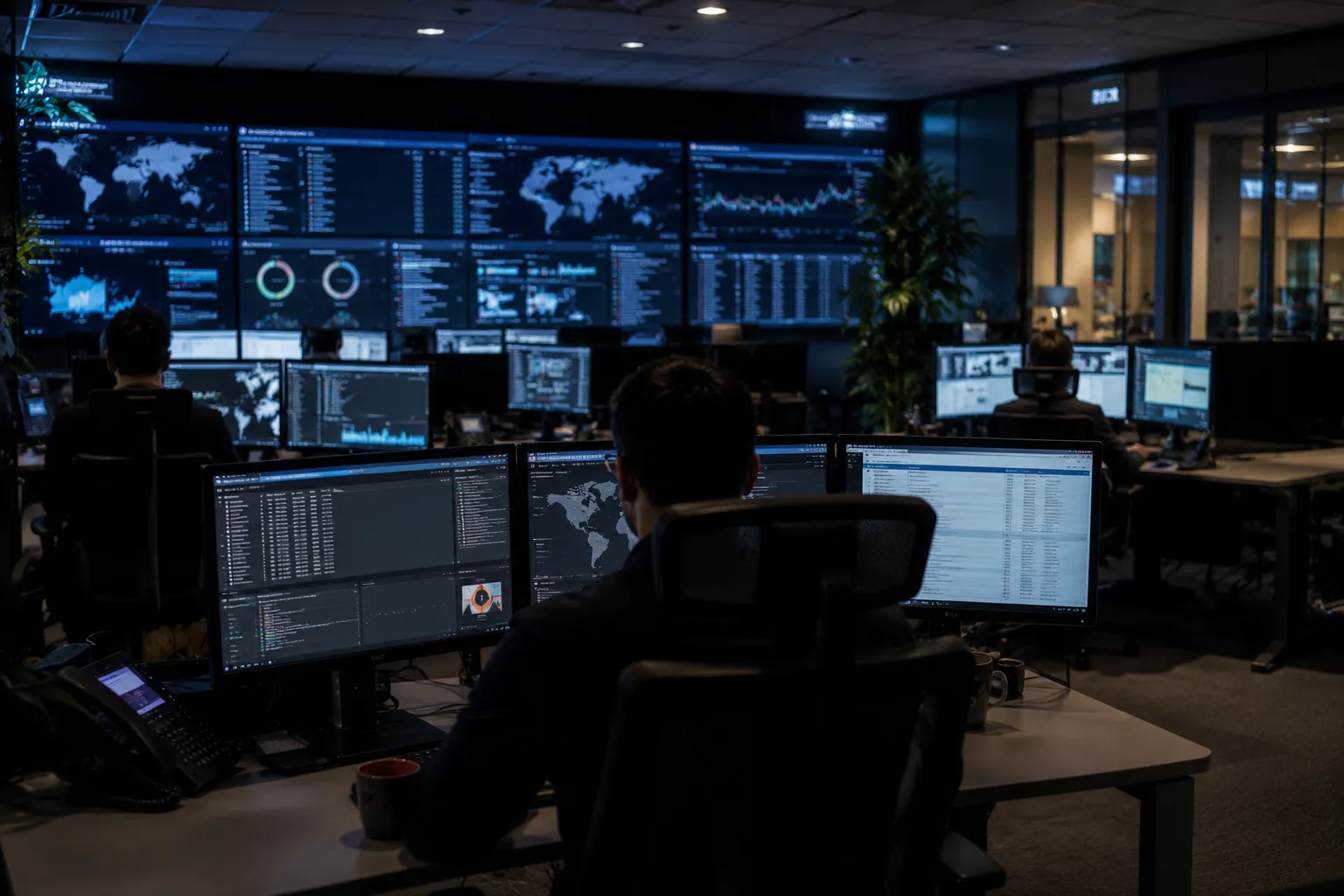
Our Dutch security analysts monitor your IT environment 24/7, detect cyber threats at an early stage, and intervene immediately to prevent or mitigate security incidents.
Identity Security
Easily secure identities, manage access rights, and meet the strictest compliance requirements.
OT Security
Specialized security for operational technology within production environments.
Cybersecurity
Integrated protection and compliance for cloud, hybrid, and on-premise systems.
IT Consultancy
Advice and guidance on IT strategy, cloud, security, and modernization.
Managed IT
Full management of networks and complex IT environments, plus support for internal teams.
Results for organisations that trust us
From blind spots to full control, from overprovisioning to a grip on cloud costs. This is how we help enterprise organizations move forward with IT and cybersecurity.
FAQ
Frequently asked questions about cybersecurity in industry
These are the questions that organizations often ask us. Do you have another question?
Is your question not listed?
No problem. Feel free to let us know what questions you have!
Industrial processes often run continuously, while some threats arise or are discovered outside office hours. 24/7 monitoring shortens the time to validation and escalation, but should form part of a broader incident and continuity plan.
Legacy systems cannot always be equipped with agents or patches without risk. Risk reduction therefore often requires segmentation, restricted access, compensating controls and monitoring of network traffic or surrounding systems.
Signals from both domains can be correlated when suitable data sources are available. This provides more context for movement between office IT and production, but does not mean every OT protocol is automatically supported.
External access can be monitored through identity, endpoint and network data, depending on the setup. Effective control also requires time-bound permissions, MFA, logging and regular supplier reviews.
A critical alert is validated, prioritised and handled according to the agreed escalation process. Containment in OT requires coordination with operations and safety, because immediate isolation can have greater operational consequences than controlled continuation.
Reports and incident records can provide evidence of monitoring and follow-up. However, an audit also assesses governance, policies, risk acceptance and other controls outside the MDR service.